For decades, the standard medical advice for concussion was simple: rest in a dark room, avoid screens, and wait. While rest is certainly important in the acute phase, we now understand that passive recovery alone is insufficient for many people — and that prolonged inactivity can actually hinder the brain’s natural healing processes.
Why “Rest and Wait” Isn’t Enough
A concussion is not simply a bruise on the brain. It’s a complex neurometabolic event that disrupts cellular energy production, triggers inflammatory cascades, alters neurotransmitter balance, and can destabilize entire brain networks. The brain doesn’t just need rest — it needs active support to restore the systems that were disrupted.
An estimated 15-30% of individuals who sustain a concussion develop persistent post-concussion symptoms lasting months or years — a condition that rest alone rarely resolves.
— Journal of the American Medical Association
“The brain doesn’t just need rest after a concussion — it needs energy, oxygen, metabolic support, and targeted rehabilitation. Passive recovery addresses only one piece of a much larger puzzle.”
The 4-Pillar Approach to Concussion Recovery
At Brain Restore Centers, we approach concussion recovery through the same comprehensive lens we apply to all brain health conditions. The 4-Pillar system addresses every dimension of post-concussion dysfunction:
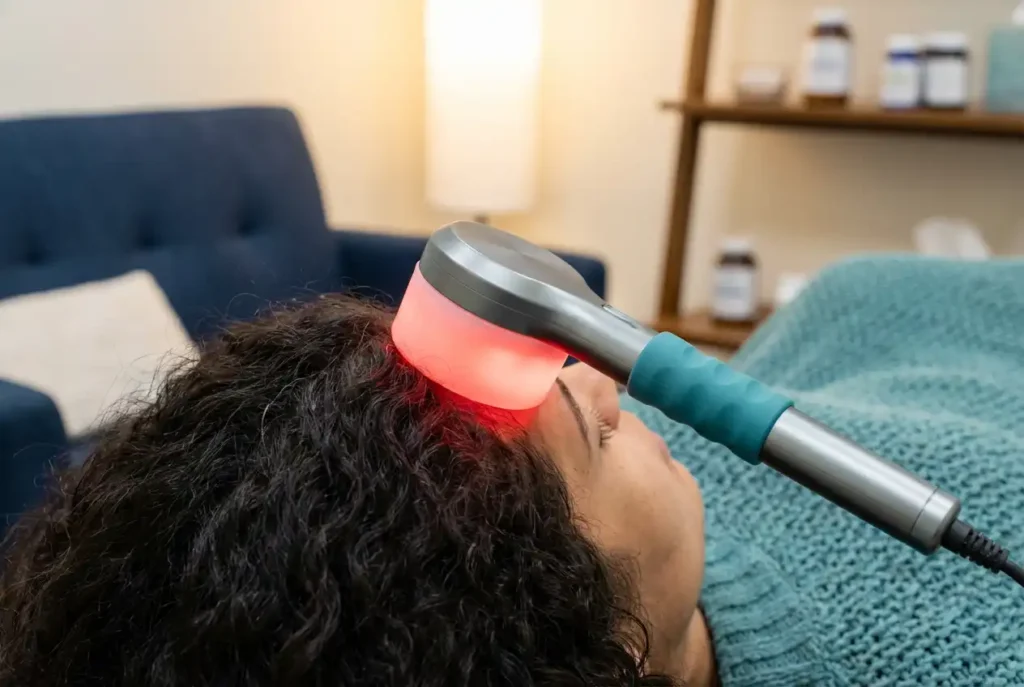
- Pillar 1 — Neuroenergetics: Restoring cellular energy production through photobiomodulation
- Pillar 2 — Brain Oxygenation: Reducing neuroinflammation and supporting repair through mHBOT
- Pillar 3 — Metabolic Healing: Identifying and resolving metabolic obstacles to brain healing
- Pillar 4 — Network Resetting: Retraining disrupted brain networks through neurofeedback and neurorehabilitation
When to Seek Help
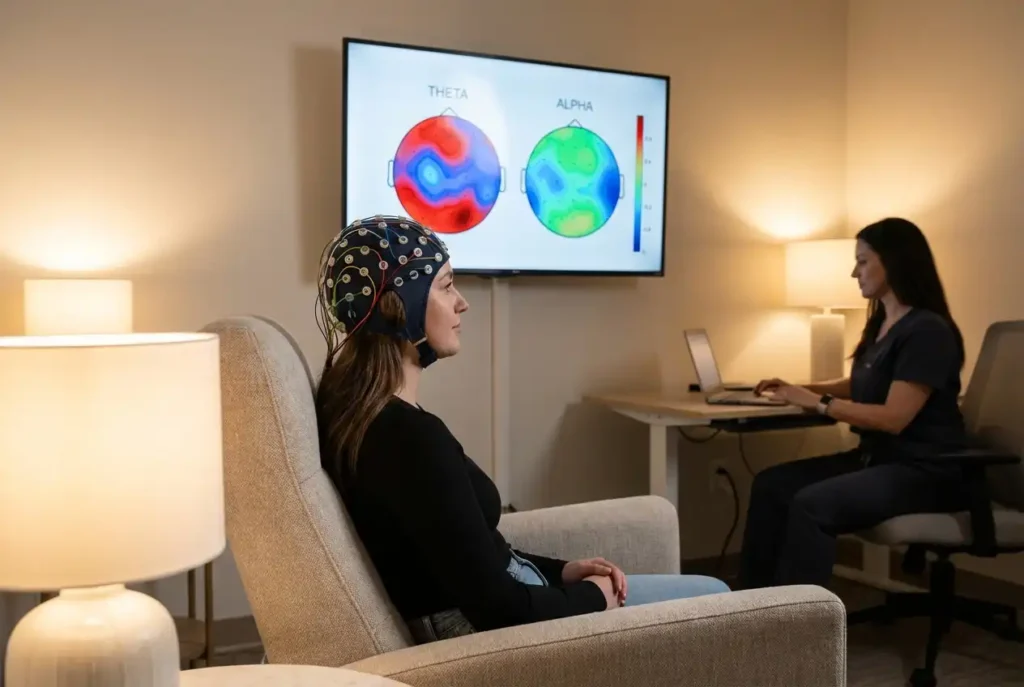
If you’re still experiencing symptoms weeks or months after a concussion — headaches, brain fog, difficulty concentrating, mood changes, sleep disruption, light sensitivity, or balance problems — it’s time to look beyond “rest and wait.” A comprehensive functional evaluation, starting with a qEEG brain map, can reveal exactly what’s happening in your brain and guide a targeted recovery plan.
The sooner you address post-concussion dysfunction, the better the outcomes tend to be. But even clients who come to us years after their initial injury often experience meaningful improvement. The brain’s capacity for change is remarkable — when given the right support.