The short answer
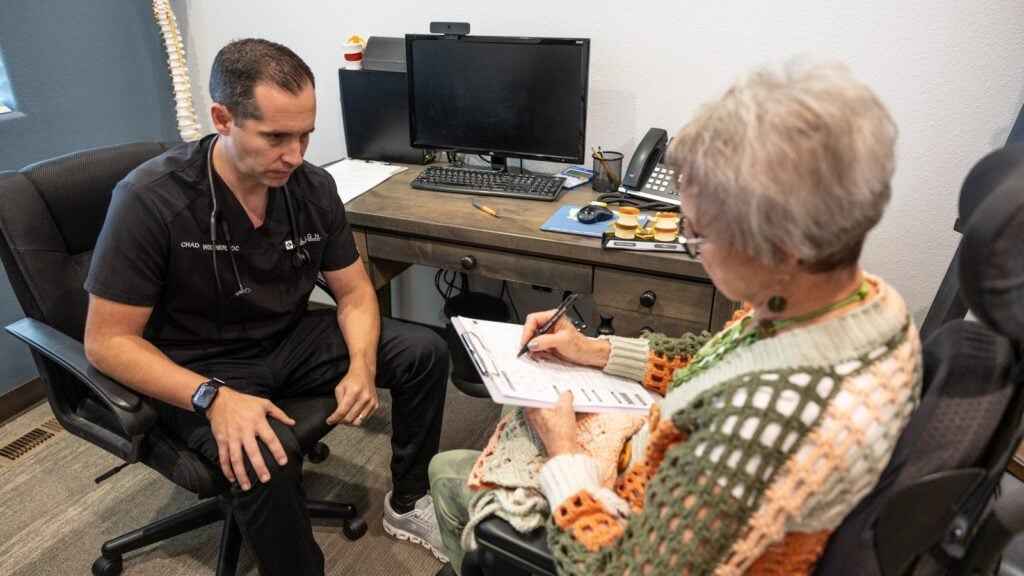
A brain health checkup gives you a baseline: a measurement of how your brain is working today that can be repeated later. It typically looks at brainwave activity (qEEG), computerized balance, memory and thinking, a hands-on neurological exam and relevant labs. It doesn’t replace a brain MRI or CT. It answers a different question: not “is something structurally wrong?” but “how well is my brain working?”
The dentist analogy
Dr. Trevor Berry frames it this way on Episode 2 of Restoring Brain Health:
“We go to a dentist and get a checkup once a year, twice a year, things like that. Why aren’t people doing that for brain health?”
— Dr. Trevor Berry, on Restoring Brain Health, Episode 2
Most people know their blood pressure, maybe their cholesterol. Very few have ever had a measurement of how their brain is working. Dr. Chad Woolner compares it to the Presidential Physical Fitness tests many of us remember from school: flexibility, the mile run, pull-ups. Those were functional markers. They measured how well your body performed, not what it looked like. A brain baseline works the same way.
Why a baseline beats a single snapshot
A single test result tells you where you are. A baseline tells you where you were, so you can see change. Sports medicine learned this first. In a study of collegiate athletes, every player completed balance and thinking tests before the season. When 36 of them later had a concussion, their balance scores on day one after injury were significantly worse than both their own preseason scores and those of matched teammates. Without the preseason baseline, the drop would have been much harder to see.
The same logic applies to everyone. If you feel fine, a baseline is a reference point. If you’ve been told to watch and wait, it turns the waiting period into useful information. And if something changes, you can measure again and compare, instead of guessing.
What a brain baseline looks at, and how each test works
1. Brainwave activity (qEEG brain mapping)
Your brain cells communicate with tiny electrical signals. An EEG picks up that activity through sensors resting on the scalp; nothing goes into the body. A quantitative EEG (qEEG) uses software to break those signals into frequency bands and compare them with a database of people of similar age. The result is a map that shows which areas are more or less active than expected, and how well different regions are communicating.
“Measuring brainwave activity is a great window to see how the brain’s functioning and if areas are working too hard or not working hard enough, or how the networks are communicating,” Dr. Berry says. Because a brain MRI shows structure and a qEEG shows activity, they can tell very different stories about the same brain.
2. Computerized balance testing (posturography)
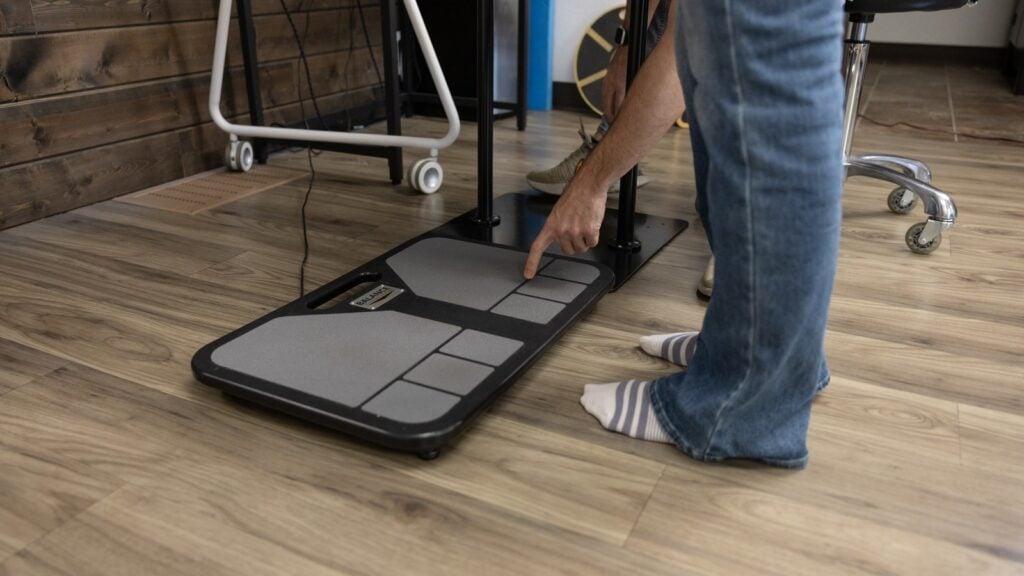
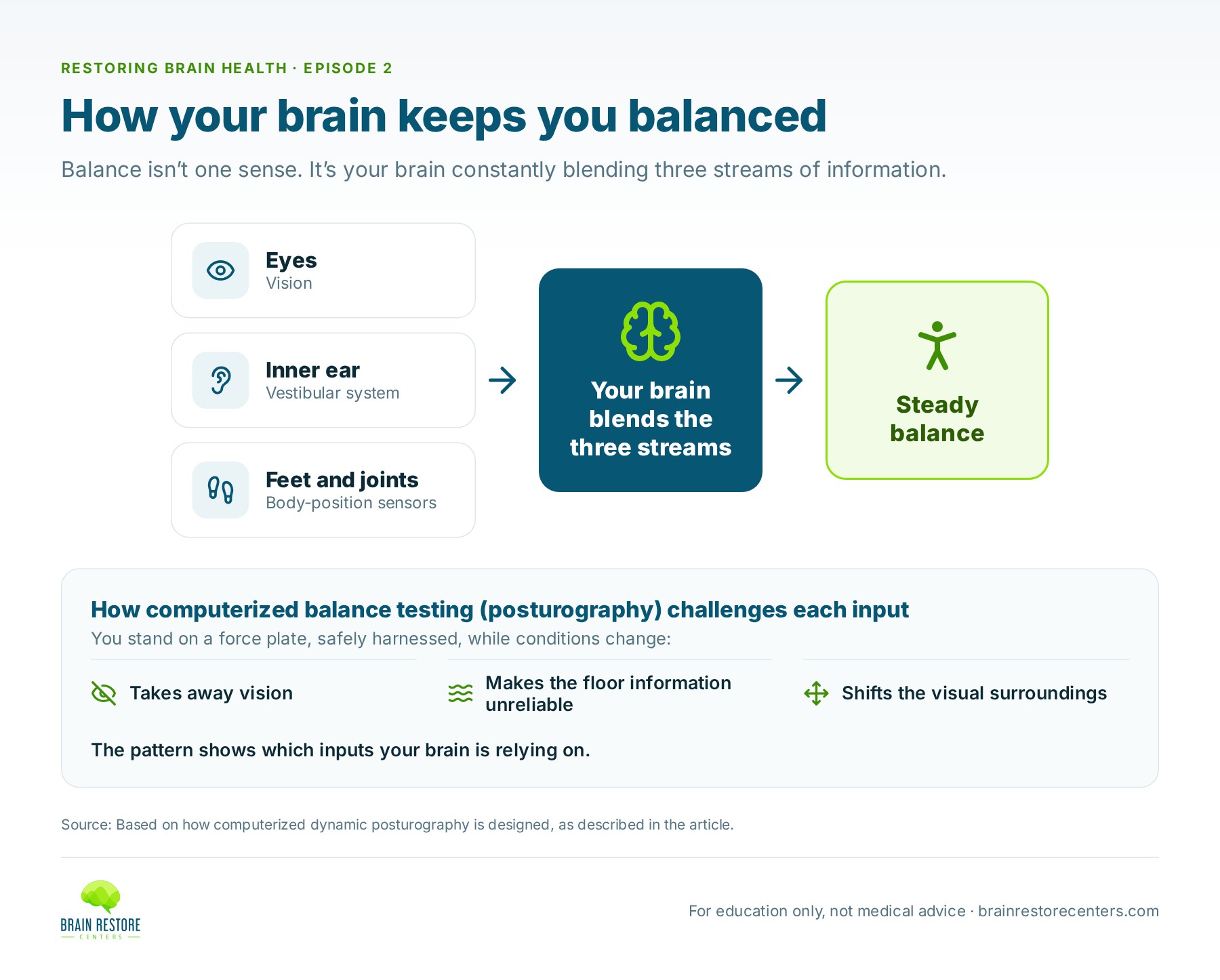
Staying upright looks simple, but your brain is constantly blending three streams of information: your eyes, your inner ear (vestibular system), and sensors in your feet and joints. Computerized dynamic posturography measures how well it does that. You stand on a force plate, safely harnessed, while the platform and visual surroundings shift in controlled ways. One condition takes away vision, another makes the floor information unreliable, and so on. The pattern shows which inputs the brain is relying on and which it’s struggling to use.
Dr. Berry calls balance “super sensitive as to what the nervous system is doing.” The athlete study above used this kind of computerized test, and the authors concluded that concussed athletes’ balance problems were likely the result of not using information from the vestibular and visual systems effectively.
3. Memory and thinking (cognitive screening)
Standardized tasks measure attention, processing speed, working memory and recall. Scores are compared with norms for your age. This is especially useful for families tracking a parent’s memory over time, or for anyone who says “I just don’t feel as sharp.”
4. A hands-on neurological exam
Reflexes, strength, sensation, coordination and eye movements. Dr. Berry explained on the show that layering these findings helps locate where a problem is coming from, for example the brainstem, the spinal cord or the frontal lobe. “The more layers that we can come at assessing the human nervous system, the better picture it paints for us,” he says.
5. Relevant labs
Dr. Berry points out that the body’s raw materials are “major players in the nervous system” yet often get overlooked. He mentions iron, B vitamins, omega-3s and magnesium. B vitamins are a good example of why: in the VITACOG trial, older adults with mild memory problems who took B vitamins had a slower rate of brain shrinkage than those on placebo, especially if they started with high homocysteine, a blood marker tied to B-vitamin status. A lab result turns a guess into a measurement.
6. Your history
Symptoms, past head injuries, sleep, medications, and what the people closest to you have noticed. Numbers mean more when they’re matched to a real-life story.
What can a baseline show?
A functional baseline can show whether brain areas are over- or under-active, how well the brain is blending balance information, how memory and processing speed compare with others your age, and whether any basic nutrients are low. When testing shows that areas of the brain aren’t working together as well as they should, at Brain Restore Centers we call it network interference. It’s something we measure, not a diagnosis.
Structural imaging vs. a functional baseline
| Brain MRI / CT | Functional baseline | |
|---|---|---|
| Main question | Is something structurally wrong, like a bleed, tumor or stroke? | How well is the brain working and communicating right now? |
| What it measures | Anatomy: shape, size and tissue | Activity and performance: brainwaves, balance, memory, reflexes, labs |
| Best used for | Ruling out emergencies and conditions that need surgery or medication | Setting a baseline and tracking change over time |
| Can be repeated to compare? | Yes, when your doctor orders follow-up imaging | Yes, that is the whole point |
The two answer different questions. Many people are best served by both.
Who should consider a brain health checkup?
- Adults who feel fine and want a reference point, especially with a family history of memory problems.
- Anyone told to watch and wait after clear imaging, for memory, dizziness, headaches or fog.
- People with a past concussion or brain injury, even years ago, who never felt quite the same.
- Parents of kids and teens after a concussion who want to know how the brain is working, not just that the CT was clear.
Frequently asked questions
Does a brain health checkup replace my doctor’s tests?
No. If your doctor orders imaging or a follow-up, keep it. A functional baseline answers a different question and sits alongside regular care.
Does it hurt?
No. qEEG sensors rest on the scalp, balance testing is done in a safety harness, and cognitive tasks are done on a screen or with a clinician.
How often should I re-measure?
That depends on why you were tested. The value comes from comparing results over time, so ask the clinician who reviews your results what interval makes sense for you.
Read the full guide: Told to “watch and wait”? What you can do in the meantime, or see 6 proactive steps while you wait.
Studies referenced
- Guskiewicz KM, Ross SE, Marshall SW. Postural stability and neuropsychological deficits after concussion in collegiate athletes. J Athl Train. 2001;36(3):263–273. https://pubmed.ncbi.nlm.nih.gov/12937495/
- Smith AD, et al. Homocysteine-lowering by B vitamins slows the rate of accelerated brain atrophy in mild cognitive impairment: a randomized controlled trial. PLoS One. 2010;5(9):e12244. https://pubmed.ncbi.nlm.nih.gov/20838622/
Watch the full conversation: Restoring Brain Health, Episode 2.
Find out how your brain is working right now
The first step is a Complimentary Brain Scan at a Brain Restore Center near you: a functional look at how your brain is working today. No pressure, no assumptions. If it looks like we may be able to help, we’ll talk about next best steps.
This article is for education and is not medical advice. It does not replace care from your own doctor. If you have sudden or severe symptoms, such as a sudden severe headache, new weakness or numbness, trouble speaking, or confusion, call 911 or go to the nearest emergency room.