Concussion recovery differs because the injury, symptoms, prior health, sleep, pain, mood and day-to-day demands differ. Persistent symptoms do not prove ongoing inflammation or permanent damage, and they are not evidence that a person is failing to try. They are a reason to reassess what is contributing and whether more targeted support is appropriate.
Episode 4 of Restoring Brain Health uses a bridge analogy to describe differences in resilience and recovery. One person may appear to have more ways to manage a disruption than another. It is a useful image if we remember its limits: nobody can count a person’s “remaining bridges” from their education, income or symptom report.
Here is a more practical way to think about recovery—and the questions that can help when symptoms linger.
First, recognize when symptoms need emergency care
After a head injury, do not use a recovery article to rule out a serious problem. The CDC’s concussion guidance lists danger signs such as a worsening headache, repeated vomiting, seizures, weakness, slurred speech, unusual behavior, unequal pupils and difficulty waking.
Call 911 or seek emergency care for danger signs. New or worsening symptoms also warrant prompt contact with a medical professional. A scheduled brain-health visit or qEEG assessment is not a substitute for emergency evaluation.
If the injury happened during sport, the person should be removed from play and medically assessed. Feeling better later that day is not clearance to return to activities that risk another head impact.
Why a “mild” injury can have a large daily impact
The term mild in mild traumatic brain injury does not mean that the disruption to someone’s life must be small. The CDC describes symptoms involving thinking, memory, balance, mood, sleep and physical comfort. Symptoms may appear immediately or emerge over the following hours or days.
Some are easier to notice in a demanding setting. Reading a busy screen, commuting in traffic or following a conversation in a noisy room can reveal problems that are less obvious at home. That variability is useful information for a care plan.
Most people improve over time, but a calendar alone cannot establish readiness for every task. A clinician needs to consider symptoms, examination findings and the demands of work, school, exercise and driving.
The person who returns to a quiet part-time schedule may face different challenges from someone whose job involves ladders, machinery or constant multitasking. Recovery planning should account for those demands without treating productivity as the only measure of health.
Inflammation and energy are pieces of the picture
The hosts discuss immune responses and brain energy after injury. These are active areas of research. They help explain why concussion is not simply a problem of visible structure, but they do not identify the cause of every lingering symptom.
The review of microglial biology describes roles in maintenance, injury responses and disease. Mechanistic evidence is not the same as a clinical trial showing that an inflammation-focused service improves concussion outcomes.
Likewise, feeling exhausted does not directly measure a shortage of ATP or establish mitochondrial disease. A person’s symptoms deserve attention even when a particular biological mechanism has not been demonstrated.
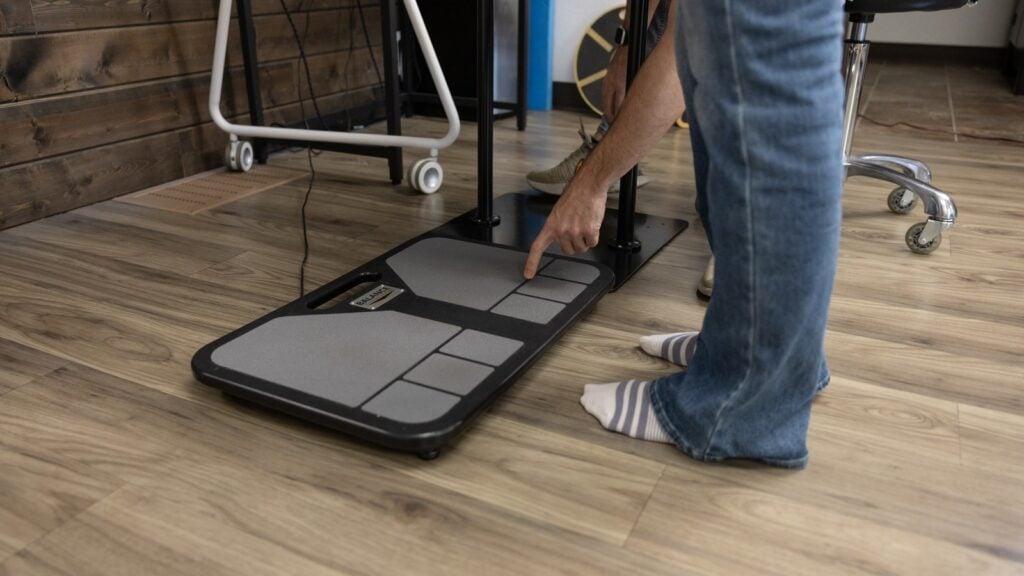
Persistent dizziness, for example, may call for assessment of balance, eye movements or the neck. Sleep disruption and headache can make concentration harder. Several contributors may coexist, and recognizing one does not rule out the others.
What current guidance says about rest and activity
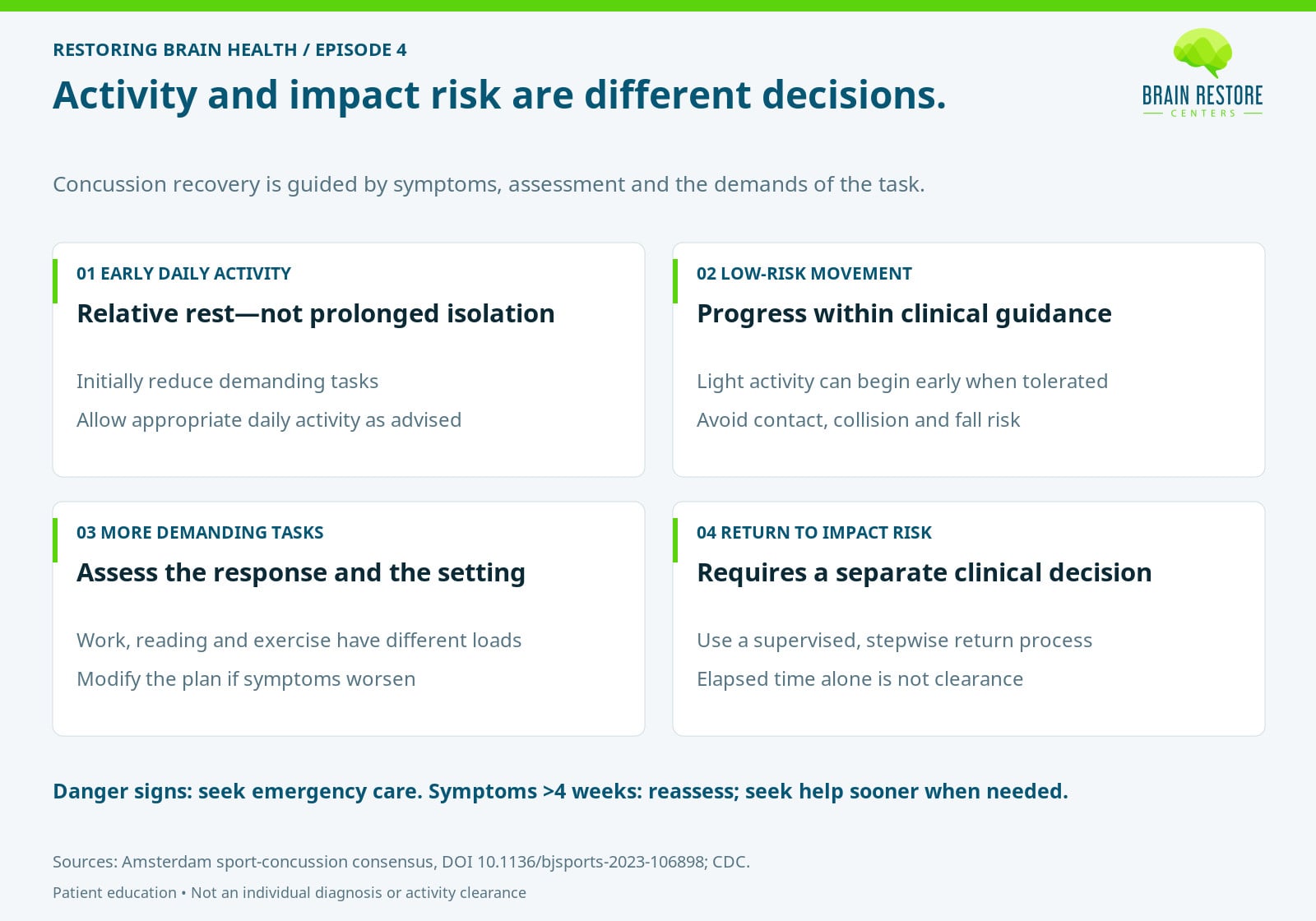
The Amsterdam consensus statement on sport-related concussion, published in 2023, advises relative rather than strict rest during the initial period after injury. That means a reduction in demanding activities while allowing appropriate daily activities, rather than prolonged isolation in a dark room.
The statement discusses light activity, such as walking, within the first 24–48 hours when it does not more than mildly worsen symptoms, followed by a gradual return to physical activity as tolerated. The plan should avoid contact, collision and fall risk. A clinician can tailor advice to the person’s symptoms and medical situation.
This does not mean “push through anything.” It also does not mean a universal six-month ban on all exercise. Episode anecdotes or a clinician’s individual practice rule should not replace an individualized, evidence-informed plan.
Return to activities with a risk of head impact is a different decision from returning to gentle activity. Clearance depends on recovery and clinical assessment, not simply elapsed time. Do not take this article as clearance to resume sport.
When symptoms persist, broaden the assessment
The Amsterdam statement uses “persisting symptoms” for symptoms lasting more than four weeks. It recommends multimodal assessment and, when appropriate, referral to clinicians with relevant expertise. Four weeks is not a requirement to wait before asking for help.
Possible areas of assessment include headache, neck symptoms, vestibular or balance problems, eye-movement symptoms, sleep, cognition and psychological health. Some difficulties may have existed before the injury, been worsened by it or developed alongside it.
That matters because “still concussed” can become an overly broad description. A person with ongoing headaches and a person with visually provoked dizziness may need different assessments, even if both also describe brain fog.
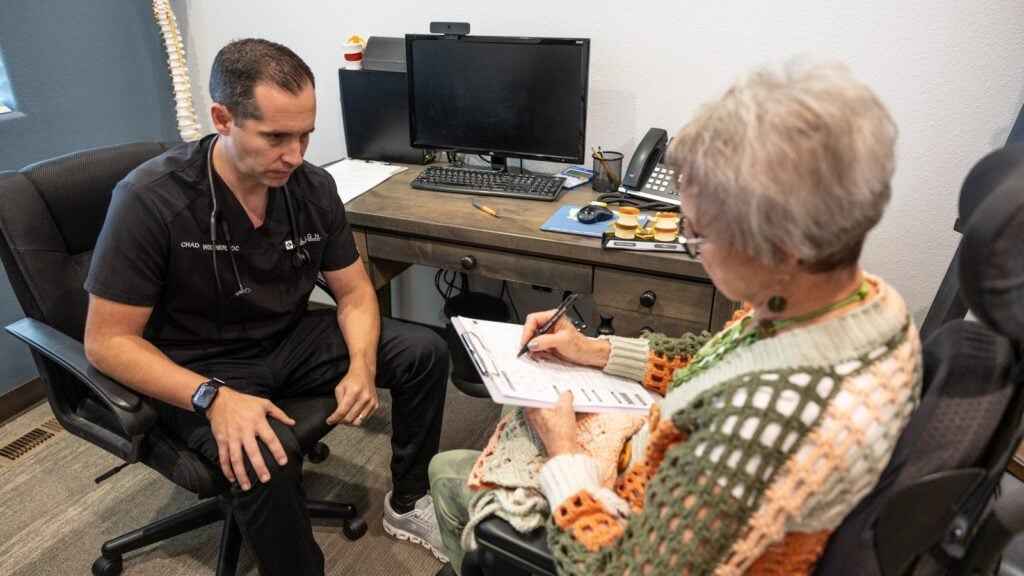
Ask what the working explanation is for each major symptom. If a test or referral is recommended, ask what it is intended to clarify and how the result would change the plan. A specific next question is more useful than simply repeating a broad battery without a clear purpose.
Why prior health and circumstances matter
The episode highlights other health conditions as part of the recovery picture. Discuss your prior concussion history, migraine or headache history, sleep difficulties, mental health, medicines and relevant chronic conditions. These details help the clinician understand the starting point.
The NIA’s cognitive-health guidance also connects thinking abilities with broader physical health and medicine effects. It is written for older adults rather than as a concussion protocol, but reinforces the importance of looking beyond one symptom label.
Resources matter too. Flexible work, transportation, safe housing and access to specialist care can change whether a recommended plan is feasible. These are not measurements of someone’s intelligence, brain connections or willingness to recover.
If a recommendation is impractical, say why. Ask about alternatives or a staged approach. An achievable plan is more useful than one that assumes unlimited time, money and support.
Does lingering brain fog mean CTE or dementia?
No. Symptoms after a concussion do not, by themselves, establish chronic traumatic encephalopathy or dementia. The episode draws broad comparisons between injury and neurodegenerative processes, but shared mechanisms do not make the conditions equivalent.
The CDC explains that CTE is associated with long-term exposure to repeated head impacts and that there is not strong evidence that one or more concussions or occasional head impacts lead to CTE. A symptom list or routine brain map cannot diagnose it.
If you are frightened by memory changes, tell your clinician directly. Fear itself can make it harder to ask questions, and a clear explanation of what is known, what is uncertain and what will be monitored can help.
Prepare a useful follow-up visit
Bring a short timeline of the injury, symptoms and any later setbacks. Include what makes symptoms worse, what helps and whether symptoms interfere with work, driving, reading, exercise or sleep.
List your medicines and supplements, prior injuries and relevant medical conditions. Ask which activities are appropriate now, which should wait and what criteria will guide progression.
Finally, agree on a review date and a reason to contact the team sooner. Recovery is not a contest between patients. The goal is a safer, more specific plan that responds to the person in front of the clinician—not a promise that one approach works for everyone.
This article is for general education, not individualized medical advice. Discuss persistent or worsening symptoms with a qualified healthcare professional.