The short answer
“Watch and wait” usually means your doctor found nothing dangerous or surgical, so there’s no reason to act on the structural question right now. That’s good news. But it isn’t a plan on its own. Keep your follow-up appointment, and use the time in between to measure how your brain is actually working, track your symptoms, and know which changes mean you should go back in right away.
You’ve described what’s going on: the fog, the dizziness, the memory slips, the headaches that won’t settle, or a child or parent who just isn’t themselves. Maybe tests were run. Then you hear four words: “Let’s watch and wait.”
For a lot of people, that’s when frustration sets in. You came looking for answers and left with a calendar reminder. This guide explains what “watch and wait” really means, why it is so common, what the research says about people whose tests come back clear, and how to use the waiting period actively instead of passively.
This article is based on Episode 2 of Restoring Brain Health, the Brain Restore Centers podcast with Dr. Chad Woolner, Dr. Sharon Webb and Dr. Trevor Berry.
Prefer to listen? Restoring Brain Health is on every major podcast app:
Listen on SpotifyListen on Apple PodcastsSubscribe on YouTube
Key takeaways
- “Watch and wait” usually means nothing dangerous or surgical was found. That is real good news.
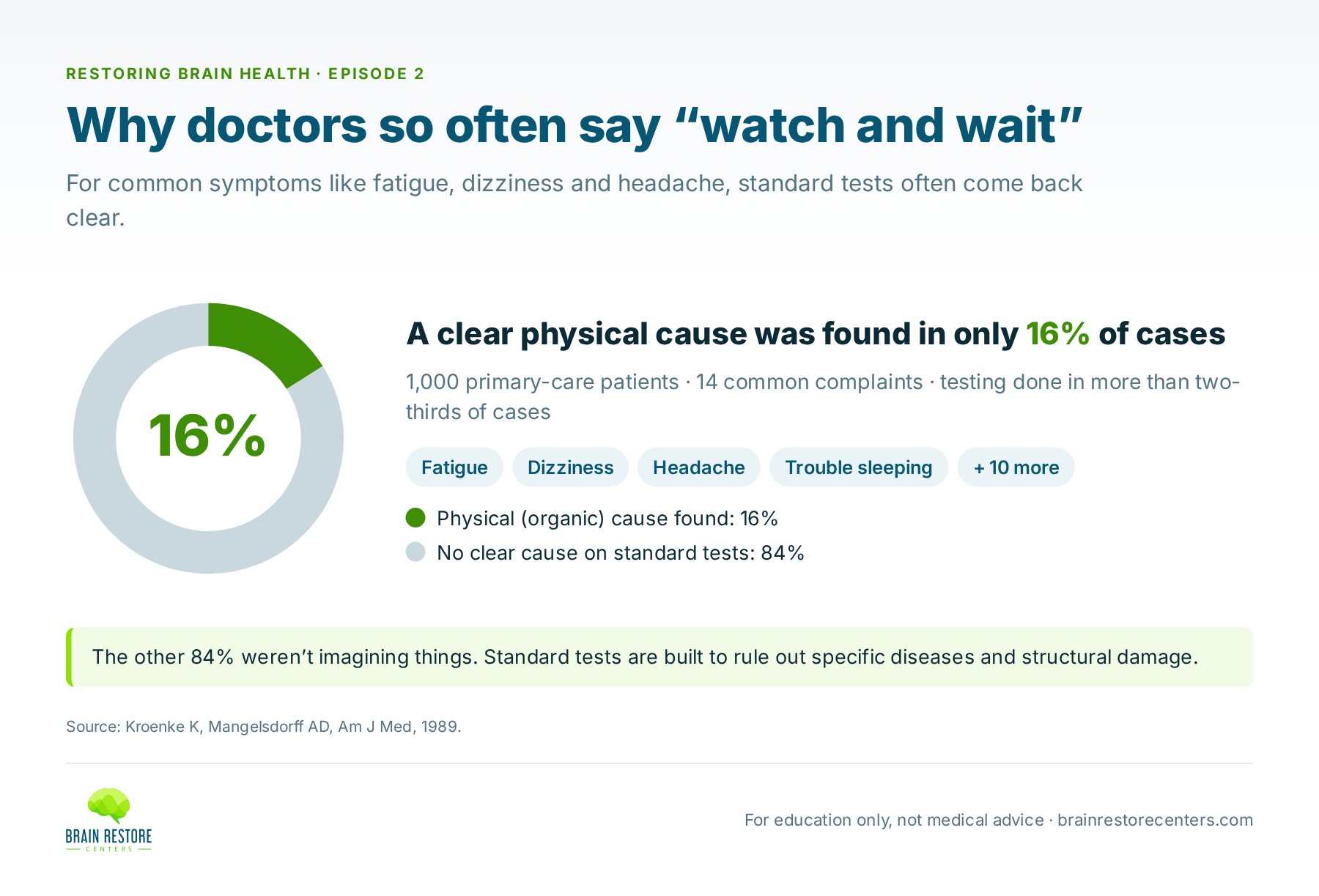
- It is common. In one classic study, only 16% of common symptoms had a clear physical cause found.
- Clear imaging doesn’t always mean full recovery. After a mild brain injury with a normal head CT, 56% of people in a large U.S. study had not fully recovered six months later.
- The brain can change at any age, and research suggests earlier is better.
- It doesn’t have to be your doctor or a functional approach. Keep your follow-up, and add information in the meantime.
- Anything sudden or new, like a thunderclap headache, means you go back in right away.
What does “watch and wait” mean?
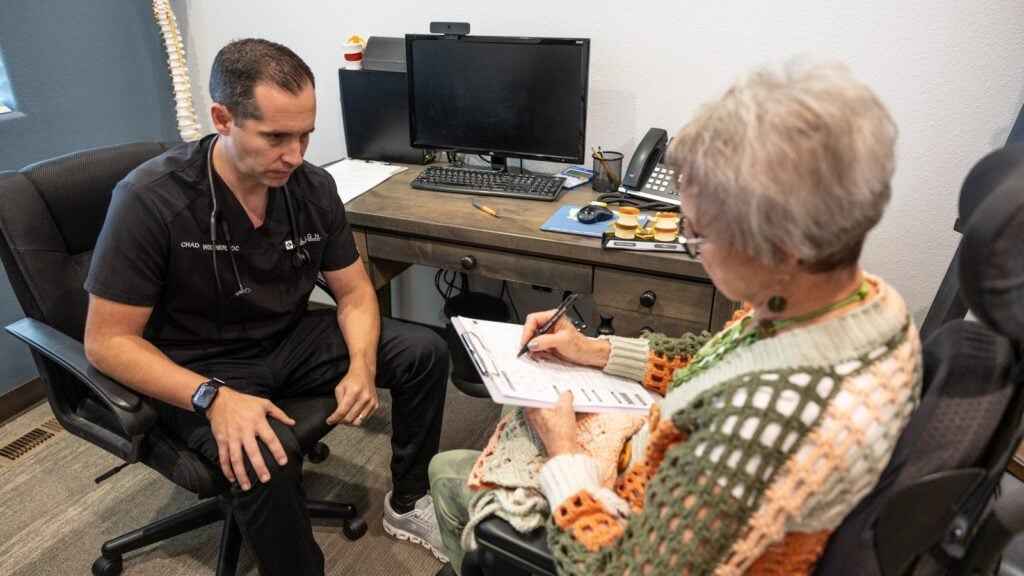
On Episode 2 of Restoring Brain Health, neurosurgeon Dr. Sharon Webb explained that it depends on why you were seen. Sometimes it means trying conservative care before considering anything bigger. “That is a reasonable approach,” she says. Sometimes it means a small finding showed up that is real but unrelated to your symptoms, so it gets checked again later. And sometimes it means every test came back clear, nothing needs surgery, and you still have symptoms. As Dr. Webb puts it: “So something is wrong.”
We break down each of these situations, and what the research says about them, in What does it mean when a doctor says “watch and wait”?
Dr. Chad Woolner described the part that often goes unsaid:
“A good doctor is not saying, ‘Sit and literally just watch and wait. Don’t do anything.’ A good doctor is saying, ‘Okay, my role here is done for now.’”
— Dr. Chad Woolner, on Restoring Brain Health, Episode 2
In other words, it’s a pause button, not a stop sign. The structural question (is there something on the brain MRI or CT that needs surgery or medication?) has been answered for now. The functional question (how well is your brain actually working?) often hasn’t been asked yet. For more on that difference, see MRI vs. functional testing explained.
Why is “watch and wait” so common?
Because medicine is very good at finding certain kinds of problems, and many real symptoms don’t fall into those categories. In a well-known study of 1,000 patients in a primary-care clinic, researchers Kurt Kroenke and Arthur Mangelsdorff tracked 14 common complaints, including fatigue, dizziness, headache and trouble sleeping. Even though testing was done in more than two-thirds of cases, a clear physical (organic) cause was found in only 16%.
That doesn’t mean the other 84% were imagining things. It means standard tests are built to rule out specific diseases and structural damage. When those come back clear, there often isn’t a next step on the conventional menu, so the natural answer is to wait and see.
Does a normal brain MRI or CT mean you’re fine?
It means something important: no bleeding, no tumor, nothing that needs surgery. That is worth celebrating. But research on brain injury shows that a clear image and a full recovery are not the same thing.
In the TRACK-TBI study, researchers followed people seen at 18 U.S. trauma centers after a mild traumatic brain injury. Every person in this group had a normal head CT and the best possible score on the standard alertness scale in the ER. Two weeks later, 73% of those followed up had not fully recovered. At six months, 56% still had not. Most of them said they had not returned to their pre-injury life. The authors recommended that these patients get a follow-up visit within two weeks, so the people who aren’t recovering can be found and helped.
Dr. Webb sees the same pattern after more serious injuries. A patient can survive, look fine walking down the street, and still struggle to finish school or hold a job. In her words:
“But still, that microscopic injury is really affecting their function.”
— Dr. Sharon Webb, on Restoring Brain Health, Episode 2
Structural imaging looks at the big picture, what Dr. Webb calls the “macroscopic level.” How the brain’s networks are working together is a different question, and it can be measured.
Passive vs. active watch and wait: side by side
| Passive watch and wait | Active watch and wait | |
|---|---|---|
| What it means | Nothing dangerous or surgical was found, so time passes until the next appointment | Nothing dangerous or surgical was found, and the waiting period is used to gather more information |
| Your follow-up appointment | The only checkpoint | Kept, exactly as planned. Nothing replaces it. |
| What gets measured | Usually the same structural question again at the next MRI or CT, if one is planned | How the brain is working: brainwave activity, balance, memory and thinking, a neurological exam, and relevant labs |
| Your symptoms | Wait and see if they settle | Tracked and written down, so changes are easy to spot and share |
| A baseline | Usually none for function | A starting point that can be measured again to see what has changed |
| When to go back sooner | Sudden or new symptoms | Sudden or new symptoms. That rule doesn’t change. |
Both start from the same good news. The difference is what you do with the time.
What can you do while you watch and wait?
Dr. Trevor Berry says the key is to look at the nervous system from many angles, because no single test tells the whole story. He compares it to the dentist: most of us get a checkup once or twice a year, yet almost nobody gets a check on how their brain is working. An active waiting period can include:
- Brainwave activity (qEEG). “Measuring brainwave activity is a great window to see how the brain’s functioning and if areas are working too hard or not working hard enough, or how the networks are communicating,” Dr. Berry says.
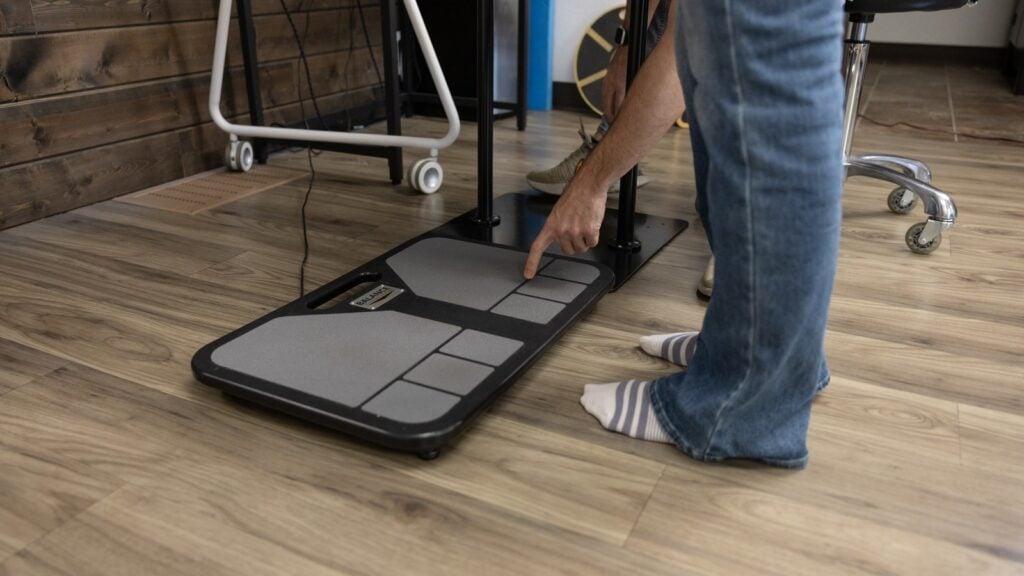
- Computerized balance testing. Balance is “super sensitive as to what the nervous system is doing,” in Dr. Berry’s words.
- A hands-on neurological exam: reflexes, strength, eye movements and more.
- Relevant labs, such as iron, B vitamins, omega-3s and magnesium, which Dr. Berry notes often get overlooked.
- A memory and thinking screen, plus a written log of your symptoms.
We explain how each of these works, and what it can show, in What a brain health baseline includes. For a step-by-step plan for the waiting period, see 6 proactive steps while you watch and wait.
When testing shows that different areas of the brain aren’t working together as well as they should, at Brain Restore Centers we call it network interference. Network interference is what we call it when testing shows that different areas and networks of the brain aren’t functioning and working together as well as they should. It’s something we measure, not a diagnosis.
Why timing matters: your brain is not fixed in place
A theme you’ll hear throughout the show is that the brain can change. Dr. Berry put it simply: “You’re not stuck with the brain that you have.” Scientists call this neuroplasticity.
For most of the 20th century, many experts believed the adult brain couldn’t grow new nerve cells. In 1998, a landmark study showed that the adult human hippocampus, a key memory area, keeps making new neurons throughout life. Later, a randomized trial of 120 older adults found that a year of walking-based aerobic exercise increased the size of the hippocampus by about 2% and improved memory, roughly reversing one to two years of normal age-related shrinkage.
“As long as you’re living and breathing, you can make change.”
— Dr. Trevor Berry, on Restoring Brain Health, Episode 2
Dr. Berry also notes that change can get harder as time goes by. Dr. Woolner added the practical point: with most of these issues, “if you’re not doing anything, it’s not progressing in your favor.” That’s the strongest reason to gather information early instead of waiting passively.
Who is this for?
- Memory and thinking concerns. You or a parent are noticing changes, and you’ve been told it’s probably normal aging, or to come back in a year.
- Concussion and brain injury. Your imaging was clear, but headaches, fog, dizziness or mood changes haven’t settled.
- Parents of kids after a concussion. Your child’s CT was fine, but school, sleep or sports still aren’t back to normal.
- Adults who want a baseline. You feel fine and want a reference point, the same way you’d check your heart or teeth.
Why objective data matters
Dr. Webb says what drew her to Brain Restore Centers was the protocols: clear standards that cut down the uncertainty for patients and providers. Coming from neurosurgery, where there’s little room for ambiguity, her summary of good medicine is simple:
“You find the problem, you have a plan, you take that plan in action, and then you reassess how is it working, and then you renavigate if you have to.”
— Dr. Sharon Webb, on Restoring Brain Health, Episode 2
Every step in that loop starts with a measurement. Without a baseline, there’s nothing to reassess against.
Frequently asked questions
Is “watch and wait” bad advice?
Not usually. It often means nothing dangerous or surgical was found, and sometimes it’s exactly the right call. The issue is mistaking it for the whole plan. Keep your follow-up, and use the time in between.
Should I stop seeing my doctor and go somewhere else?
No. As Dr. Woolner says, “Keep that appointment.” It doesn’t have to be one or the other. Functional testing adds information alongside your regular care.
When should I stop waiting and go back in?
Anything sudden or new. Dr. Webb gives the example of a thunderclap headache, a sudden, severe headache that peaks within about a minute. At that point there is no more watching and waiting. For sudden severe symptoms, call 911.
What can actually be measured while I wait?
Brainwave activity, balance, memory and thinking, a neurological exam and relevant labs. Together they give you a baseline you can measure against later.
Is it too late if I’ve already been waiting a long time?
No. Research on neuroplasticity shows the brain keeps the ability to change throughout life. Starting sooner is better, but starting now is better than not starting.
Studies referenced
- Kroenke K, Mangelsdorff AD. Common symptoms in ambulatory care: incidence, evaluation, therapy, and outcome. Am J Med. 1989;86(3):262–266. https://pubmed.ncbi.nlm.nih.gov/2919607/
- Madhok DY, et al.; TRACK-TBI Investigators. Outcomes in patients with mild traumatic brain injury without acute intracranial traumatic injury. JAMA Netw Open. 2022;5(8):e2223245. https://pubmed.ncbi.nlm.nih.gov/35976650/
- Eriksson PS, et al. Neurogenesis in the adult human hippocampus. Nat Med. 1998;4(11):1313–1317. https://pubmed.ncbi.nlm.nih.gov/9809557/
- Erickson KI, et al. Exercise training increases size of hippocampus and improves memory. Proc Natl Acad Sci U S A. 2011;108(7):3017–3022. https://pubmed.ncbi.nlm.nih.gov/21282661/
Find out how your brain is working right now
The first step is a Complimentary Brain Scan at a Brain Restore Center near you: a functional look at how your brain is working today. No pressure, no assumptions. If it looks like we may be able to help, we’ll talk about next best steps.
This article is for education and is not medical advice. It does not replace care from your own doctor. If you have sudden or severe symptoms, such as a sudden severe headache, new weakness or numbness, trouble speaking, or confusion, call 911 or go to the nearest emergency room.